Quick Answer:
Nepali food is ingredient-forward, lightly spiced, and dairy-light built around the dal bhat template. North Indian food is sauce-led, rich with cream and ghee, and built around tandoor cooking. Both are extraordinary cuisines. At Raato Ghar in Granville, our chefs cook both every day.
Key Insights
- Nepali cuisine is generally milder, lighter, and ingredient-focused compared to the bolder, spicier Indian dishes.
- Staples differ: dal bhat tarkari in Nepal vs diverse breads and rich curries in India.
- Iconic Nepali item: momo (dumplings) – a must-try in Sydney.
- Both share spices like cumin and turmeric, but Nepali versions use them more subtly.
- Sydney has a growing Nepali food scene in areas like Rockdale, Granville, and the CBD.
Table of Contents
If you’ve ever sat down at a South Asian restaurant in Sydney and wondered whether the food on your plate is Nepali or Indian, you’re asking a smarter question than you might think. The two cuisines share geography, spice racks, and centuries of cultural exchange. But sit down to a proper Nepali dal bhat alongside a North Indian butter chicken, and the difference becomes immediately clear.
At Raato Ghar in Granville, we cook both every single day. Our chefs grew up eating rice from the hills of Nepal and slow-cooked curries from the plains below. That lived familiarity with both traditions gives us a perspective that goes beyond what any food blog can replicate from the outside.
What follows isn’t theory it’s what we see, taste, and serve in our kitchen, with context from food history and culinary tradition to back it up.
This guide breaks down the genuine differences between Nepali food vs Indian food: flavour profiles, staple dishes, spice philosophy, cooking techniques, and how each fits into daily life. Whether you’re planning a first visit to Raato Ghar, exploring Sydney’s South Asian food scene, or simply curious, you’ll leave knowing exactly what to expect and where to taste the real thing in Western Sydney.
Why People Confuse Nepali and Indian Food in the First Place
It’s an understandable mix-up. Nepal and India share an open border, a long history of migration, and many of the same core ingredients. Lentils, rice, cumin, turmeric, coriander, and ginger appear in both cuisines without fail. Walk into most Sydney restaurants labelled “Nepali and Indian”, and you’ll see menus that pull from both traditions without always distinguishing between them.
The confusion runs deeper than just geography. During the Rana dynasty era, Kathmandu’s elite adopted many North Indian culinary customs. Nepali food in the Terai lowlands bordering India’s Bihar and Uttar Pradesh states shares more with Indian cooking than what you’d find in the Himalayan highlands. For centuries, traders, pilgrims, and families moved back and forth across that border, carrying recipes with them.
But Nepal also borders Tibet and China, and that northern influence is equally strong in the country’s most distinctive dishes. Momo, thukpa, and chang (fermented millet beer) all trace their roots northward, not southward. Nepal’s high-altitude farming traditions, its reliance on fermentation, and its limited use of dairy-heavy sauces all pull the cuisine in a direction that North Indian cooking never goes.
The result is a cuisine that looks familiar at first glance and feels completely different once you’re actually eating it.
Planning a Sydney Event?
The Core Difference: Flavour Philosophy
This is where the real distinction lives not in a single spice or dish, but in the underlying philosophy of how food should taste.
Nepali Cuisine: Ingredient-Forward, Balanced, Restrained
Nepali cooking trusts the ingredients. A bowl of dal bhat tarkari the national dish, eaten twice daily by most Nepali households , lets each component speak clearly. The lentil soup is spiced but not complicated. The vegetable side dish (tarkari) carries heat from a few whole spices but isn’t buried in a heavy sauce. The rice is plain. The achar pickle provides acidity and heat. Together, they balance each other.
This philosophy is partly practical. Nepal is a landlocked, mountainous country where ingredients vary dramatically between the lowland Terai, the mid-hills, and the high Himalaya. Cuisines that develop in those conditions emphasise what’s available and fresh, rather than building elaborate layered sauces. Fermentation Gundruk (fermented dried greens), sinki (fermented radish), and achar (pickles) play a big role, extending the life of seasonal produce.
Spices exist to support, not dominate.
- Timur (Sichuan pepper, found wild across Nepal’s hills) gives a citrusy, numbing note
- Jimbu — a dried herb almost exclusive to Nepali cooking — adds an onion-like aroma to dal
- Fenugreek seeds are toasted dark in oil and poured over dishes as a final flavouring
None of these techniques stack spice on top of spice. They add specific, singular notes.
Indian Cuisine: Sauce-Led, Layered, Regionally Diverse
North Indian cooking, the style that dominates Sydney’s South Asian restaurant scene, works differently. A butter chicken or lamb rogan josh is built around a gravy: onions cooked down until sweet, then garam masala, then tomato, then cream, each layer adding depth before the protein arrives. The goal is richness, complexity, and a sauce substantial enough to eat with bread.
The layered masala approach is one of the great achievements of any culinary tradition. But it’s a fundamentally different goal to Nepali cooking’s restrained balance.
Indian cuisine is also vastly more regionally diverse than Nepali food. South Indian food (dosas, idli, rasam, and coconut-heavy curries) bears almost no resemblance to North Indian food (naan, paneer, korma, and biryani), and neither looks much like Bengali or Goan cooking. Nepali cuisine is more unified; the dal bhat template holds across most of the country, with regional variations rather than entirely different culinary systems.
Spices and Seasonings: A Closer Comparison
Both cuisines draw from the same general pantry, but the quantities, combinations, and techniques diverge significantly.
Spice / Element | Nepali Use | North Indian Use |
Cumin | Whole seeds, tempered in oil | Whole and ground, part of masala base |
Turmeric | Moderate, added early | Moderate to heavy in curries |
Chilli | Present but restrained | Often prominent, varies by dish |
Garam Masala | Rarely used — not a staple | Central to most gravies |
Timur (Sichuan pepper) | Common, especially in momo | Not used |
Jimbu (dried herb) | Signature in dal | Not used |
Fenugreek | Tempered in oil as finishing | Used in spice blends |
Cream / Butter | Uncommon except in specific dishes | Frequent in restaurant curries |
Ghee | Used lightly | Used generously |
The absence of cream and heavy dairy in most Nepali dishes is one of the most noticeable practical differences. Nepali cooking gets richness from lentils, sesame, and nut-based chutneys rather than cream or paneer. This makes many Nepali meals feel lighter — which is exactly why the dal bhat tradition involves unlimited refills.
Staple Dishes: What You’re Actually Eating
The Nepali Plate
- Dal Bhat Tarkari is the foundation of Nepali food culture. Rice (bhat), lentil soup (dal), a vegetable curry (tarkari), and achar pickle are served together and refilled freely. Nourishing, balanced, and built for daily repetition without fatigue, every restaurant and household has its own version.
- Momo are the dish most non-Nepalis try first, and they’re worth the attention. Steamed or fried dumplings filled with spiced minced chicken, buffalo, vegetables, or cheese, served with a smoky tomato-sesame chutney. Nepali momo differ from Tibetan or Chinese versions: denser, more herb-forward, with heat that comes from the chutney rather than the dumpling itself. Jhol momo (momo served in a spiced soup broth) has become extremely popular in recent years.
- Dhindo is a thick porridge made from millet or buckwheat flour, traditionally eaten in hill regions where rice doesn’t grow easily. Dense, nutty, and filling paired with gundruk soup and achar, it’s genuinely satisfying.
- Newari specialities from the Kathmandu Valley represent one of Nepal’s most complex food traditions: Samay Baji (a ceremonial feast platter), Yomari (sweet rice-flour dumplings), Chatamari (rice flour crepes), and Bara (lentil cakes). These are tied to festivals and community meals but are increasingly available in authentic Nepali restaurants.
- Sekuwa (grilled marinated meat skewers) and goat sukuti (dried, spiced goat jerky) represent Nepal’s meat traditions.
“The dal bhat at Raato Ghar is the most authentic I’ve had outside Nepal. The flavours are clean and balanced — exactly how my mother used to make it.” — Google Review, 5★
See our full Nepali and Indian menu →
The Indian Plate
North Indian food in Sydney centres around the tandoor, dairy-rich gravies, and bread. The dishes most familiar to Sydney diners — butter chicken, lamb rogan josh, saag paneer, biryani, and tikka masala — share a template: marinated protein, slow-cooked tomato or yoghurt sauce, finished with cream or butter, and served with naan or basmati rice.
Chaat and street snacks (samosa, bhel puri, pani puri, and pakora) represent a different register, lighter and more acidic, built on tamarind, yoghurt, and fresh herbs rather than heavy sauces.
South Indian cuisine, less common in Sydney, is almost entirely different: rice-based and coconut-forward, with rasam and sambar replacing the North Indian gravy tradition and dosas and idli replacing naan.
Cooking Methods: How Each Cuisine Prepares Food
The techniques reveal the philosophy behind each cuisine.
Nepali methods:
- Steaming (momo, sel roti)
- Boiling (dal, thukpa noodle soups, dhindo)
- Light stir-frying with tempering (tarkari vegetables)
- Grilling over open flame (sekuwa)
- Fermenting (gundruk, sinki, achar)
North Indian methods:
- Tandoor grilling (naan, tikka, kebabs)
- Tadka tempering whole spices in hot oil, then adding to a dish
- Slow-simmering rich gravies (korma, rogan josh)
- Deep-frying (pakora, poori, samosa)
- Marinating in yoghurt-spice mixtures before cooking
Result: Nepali food is generally lower in oil and dairy than North Indian equivalents. A Nepali meal will leave you full but not heavy. A North Indian restaurant meal tends toward more caloric density and a richer finish. Neither is inherently better they’re designed for different purposes.
Health and Nutrition: Which Is the Lighter Option?
This is one of the most common questions we hear at Raato Ghar, especially from diners who want to eat South Asian food regularly without the heaviness that sometimes accompanies North Indian restaurant meals.
Nepali food has a genuine case for being the lighter option not because it’s diet food, but because its traditional ingredients and methods don’t rely on cream, butter, or deep-frying. Lentils provide protein. Seasonal vegetables make up the bulk of most meals. Fermented foods like gundruk contain natural probiotics that support gut health. Millet and buckwheat (in dhindo) offer fibre and nutrients that refined white rice alone doesn’t.
That said, “Indian food” is too broad a category for blanket health claims. A South Indian meal of rasam, rice, and sabzi can be extremely light and nutritious. A dal tadka from any Indian tradition is nutritionally comparable to a Nepali dal. The richness more often comes from restaurant conventions extra ghee, extra cream than from the cuisine itself.
The honest answer: home-style Nepali and Indian food are both nutritious. Restaurant versions of North Indian food in Sydney skew richer than home versions. Nepali restaurant food tends to stay closer to its everyday form. Research on South Asian dietary patterns indicates that lentil-and-rice-based diets common across Nepal show strong associations with lower cardiovascular disease rates when eaten in traditional proportions.
Where to Taste Both in Sydney — Starting at Raato Ghar Granville
Sydney’s South Asian food geography has shifted considerably over the past decade. Harris Park (Parramatta) remains the capital of Indian food in Western Sydney, but the Nepali food scene has built its own anchor points in Granville, Rockdale, Kogarah, Hurstville, and increasingly the CBD.
Granville is particularly important for this comparison; it’s one of the few Sydney suburbs where you can find genuinely authentic Nepali food, not just Indian restaurants with momo on the side, but kitchens run by people who grew up eating dal bhat twice a day.
Raato Ghar — 12 Good St, Granville NSW 2142
Our kitchen serves both Nepali and Indian cuisine under the same roof, cooked by chefs who treat both traditions with equal seriousness. If you want to understand the difference between Nepali food vs Indian food without visiting multiple restaurants, this is the most practical way to experience both in Western Sydney.
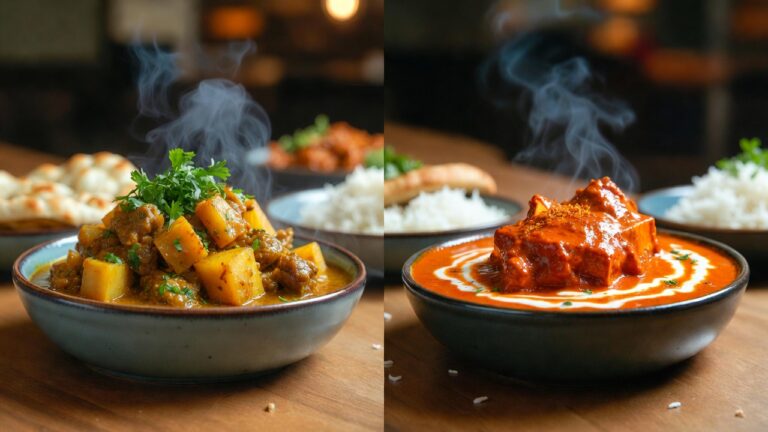
Order the dal bhat tarkari and the butter chicken in the same sitting. Taste them side by side. The difference in flavour philosophy becomes obvious within a few mouthfuls.
We offer:
- Dine-in (lunch & dinner service)
- Buffet service , great for exploring both cuisines
- Takeaway and delivery
- Private event catering across Sydney
Conclusion
Nepali food vs Indian food isn’t a competition it’s a conversation between two related but distinct culinary traditions that developed in different landscapes, under different constraints, with different cultural priorities.
Indian food, especially North Indian, is built for richness. It layers spice, dairy, and slow heat to produce gravies that are deeply satisfying and complex.
Nepali food is built for balance. It trusts simple ingredients, uses spices to complement rather than dominate, and produces meals light enough to eat twice a day without fatigue.
Both are worth knowing. The best way to understand the difference is to taste them back to back not a diluted hybrid, but the real thing prepared by people who grew up eating it.
That’s what we do at Raato Ghar in Granville.
Frequently Asked Questions (FAQs)
No. They share ingredients and some historical influences, but the flavour philosophies, staple dishes, and cooking techniques are meaningfully different.
Nepali food is generally milder, less dairy-heavy, and more ingredient-forward than North Indian restaurant food.
North Indian food is typically spicier and more intensely flavoured overall. Nepali cooking uses spices more subtly with distinctive flavours from timur (Sichuan pepper) and jimbu herb rather than heavy chilli heat or garam masala. Guests who find North Indian curries too rich or spicy often find Nepali food a more comfortable starting point.
Most people start with momo , steamed or fried dumplings served with spicy tomato-sesame chutney. They're approachable and immediately delicious. For a deeper introduction to the Nepali table, dal bhat tarkari is the real answer , it's what Nepali people eat twice a day and the dish that best represents the cuisine's philosophy.
Yes, strongly so. Dal bhat tarkari is naturally vegetarian (and easily vegan), as are many Nepali vegetable dishes and most chutneys. Momo are available in vegetarian versions. Nepal has a significant Hindu population with many practising vegetarians, so the vegetarian tradition is genuine and well-developed. At Raato Ghar, we clearly mark vegetarian and vegan options.
Raato Ghar at 12 Good St, Granville serves authentic Nepali and Indian cuisine in the same restaurant, making direct comparison easy. We're open for lunch and dinner. Other areas worth exploring for Nepali-specific menus include Rockdale, Kogarah, and Hurstville. Book a table at Raato Ghar →
Traditional Nepali cooking uses considerably less cream, butter, and paneer than North Indian restaurant food. Ghee appears occasionally, and yoghurt-based marinades exist in some dishes, but heavy cream sauces are not part of the Nepali culinary tradition which is one reason Nepali food often feels lighter.
Yes , and at Raato Ghar, this is exactly what we specialise in. Our catering menus can blend both traditions (Nepali momos and dal bhat alongside Indian curries and naan) or focus entirely on one. Book catering → to discuss what works for your event.